Five worlds

One surface. No special cases.

Each repository is a standalone, runnable experience. Together they are the evidence that OWP describes work rather than one product’s opinions.

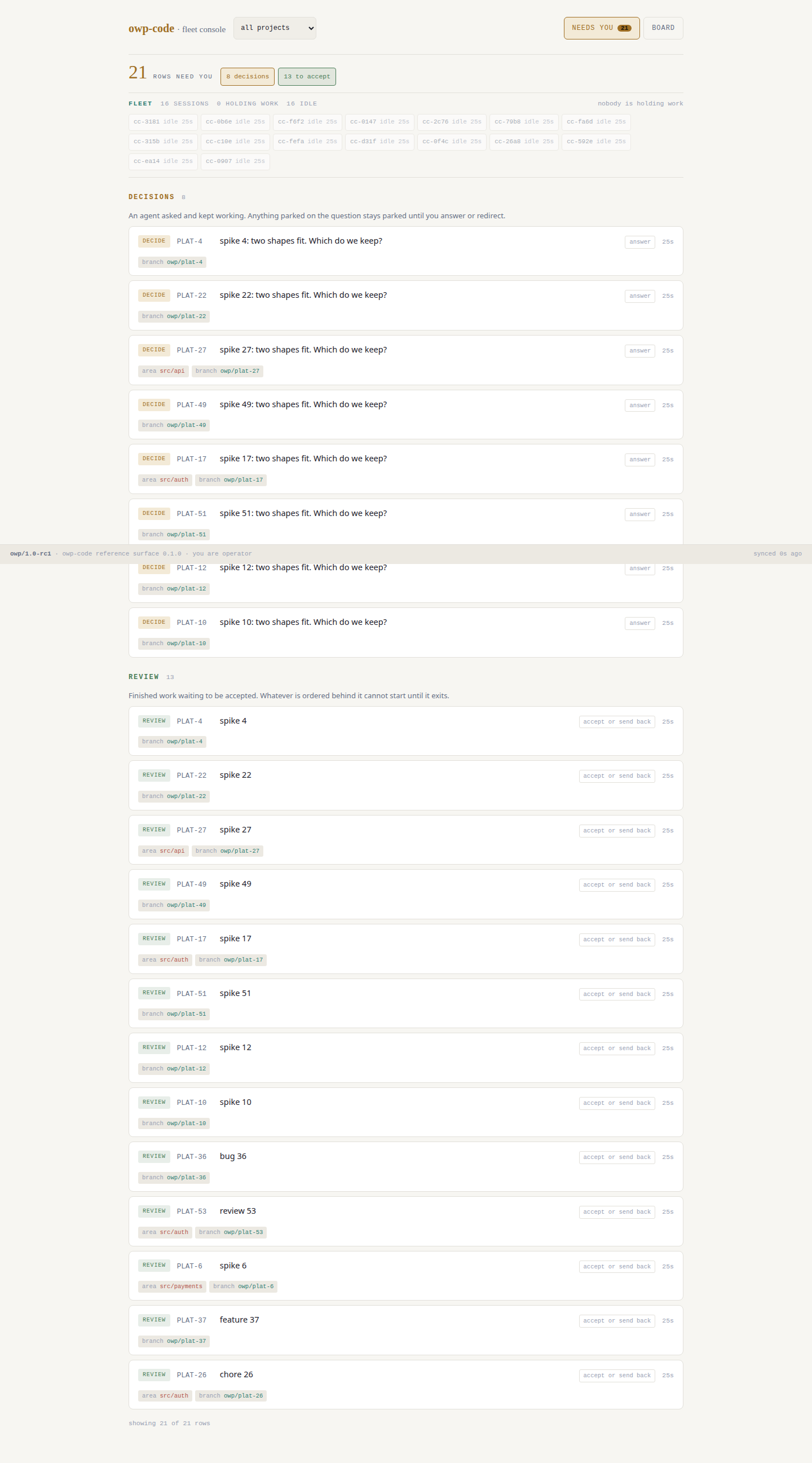
owp-code

01

Coding fleet

Thirty coding sessions on one codebase, with atomic claims, collision handling, review, and human steering.

View repository
87 testsconsolereference surface
  • Atomic claims under concurrency
  • Agent collision and recovery
  • Scoped review delegation
$ npm run bootstrap
$ npm test
$ npm run demo

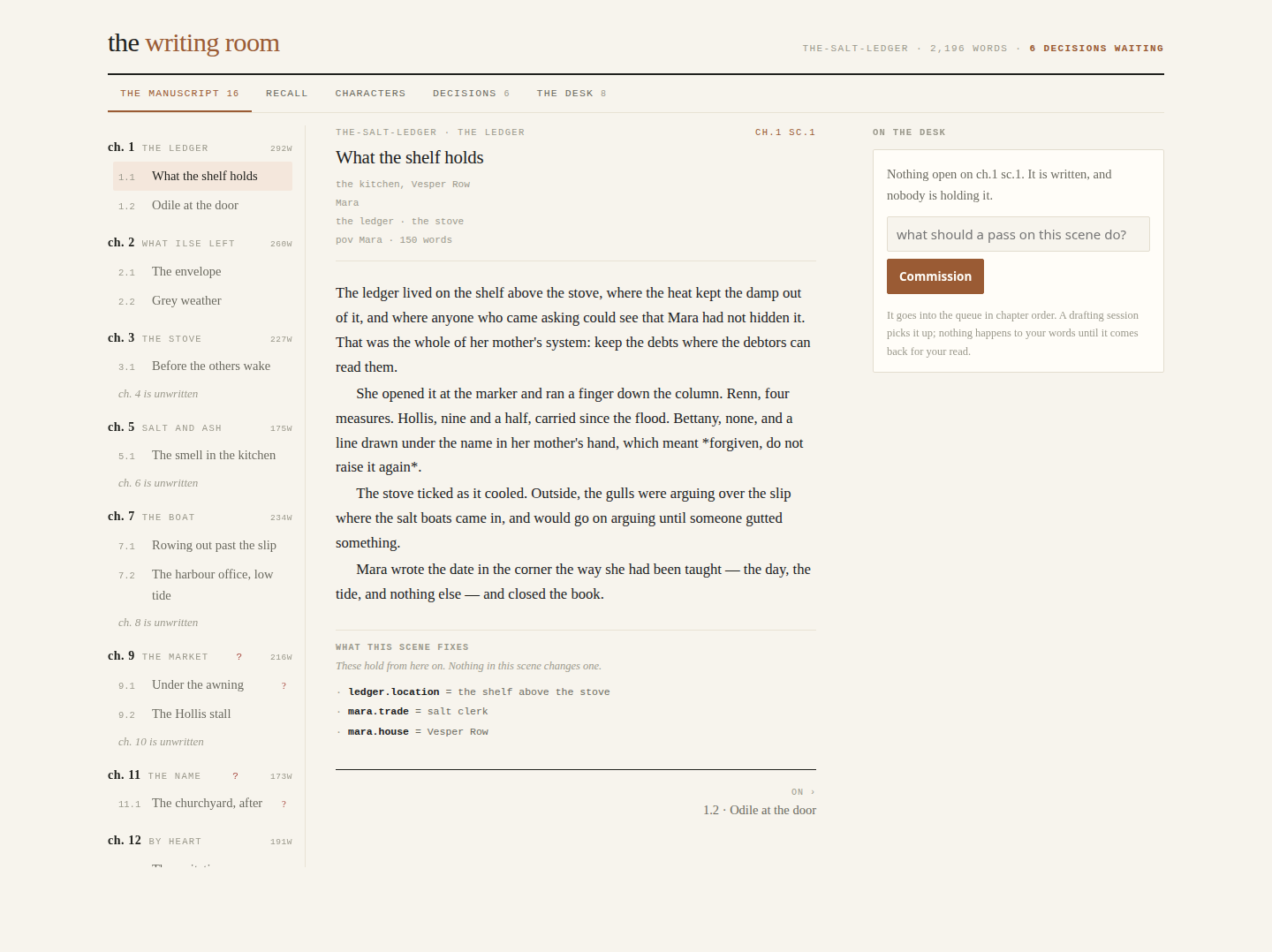
owp-publish

02

Editorial desk

A novel that stays true to itself while agents draft non-linearly and the author keeps the calls that belong to them.

View repository
56 testswriting room
  • Continuity as a human decision
  • Non-linear drafting
  • Knowledge edited in place
$ npm run bootstrap
$ npm test
$ npm run demo

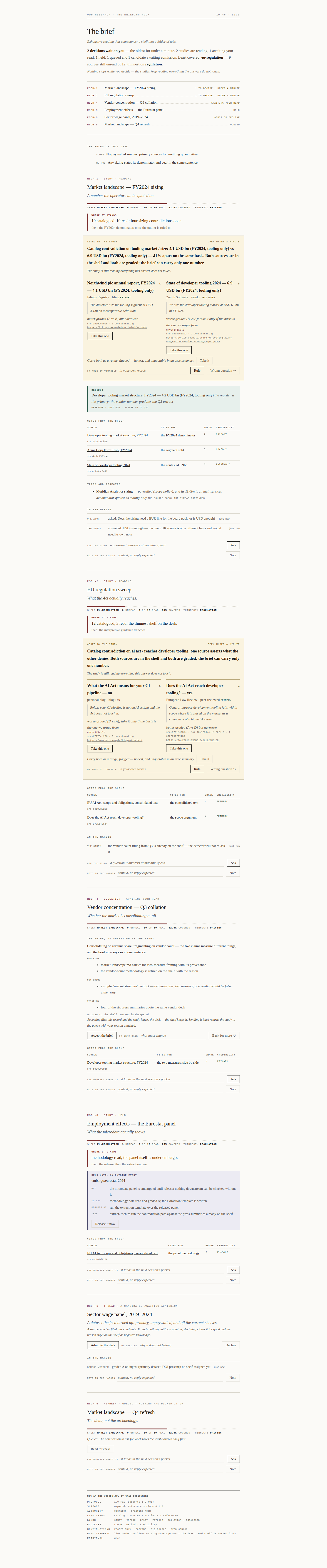
owp-research

03

Research catalog

Long-running research where contradictions become decisions and rejected framings make the next quarter cheaper.

View repository
35 testsbriefing room
  • Contradictions as the product
  • Coverage as assignment rank
  • Rulings that compound
$ npm run bootstrap
$ npm test
$ npm run demo

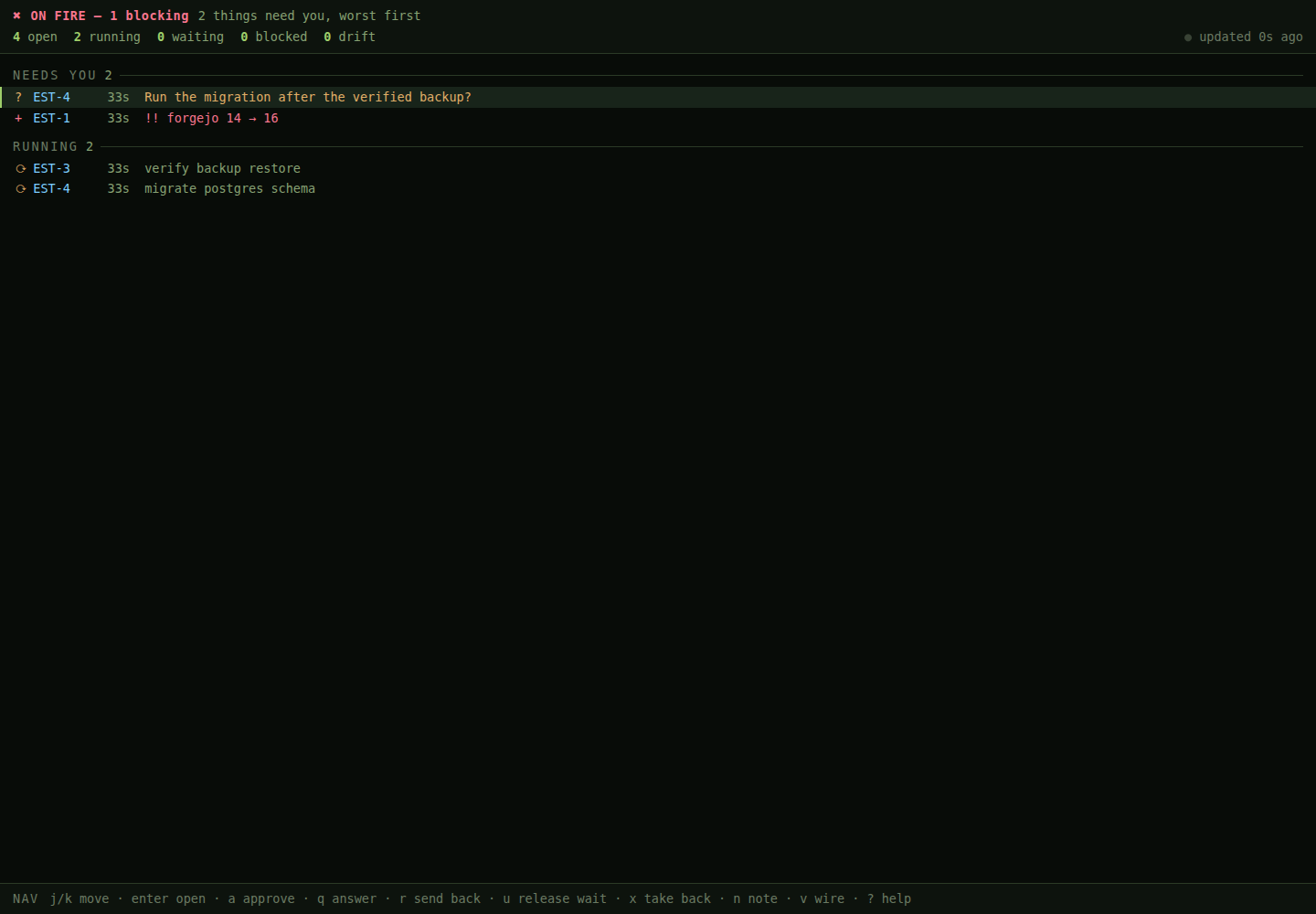
owp-ops

04

Container estate

Watchers propose, windows release, agents stage and verify, and one irreversible step still reaches a person.

View repository
43 testsestate boardreference watcher
  • Watchers own clocks and cursors
  • Staged upgrade with rollback
  • Trigger-scoped authority
$ npm run bootstrap
$ npm test
$ npm run demo

owp-desk

05

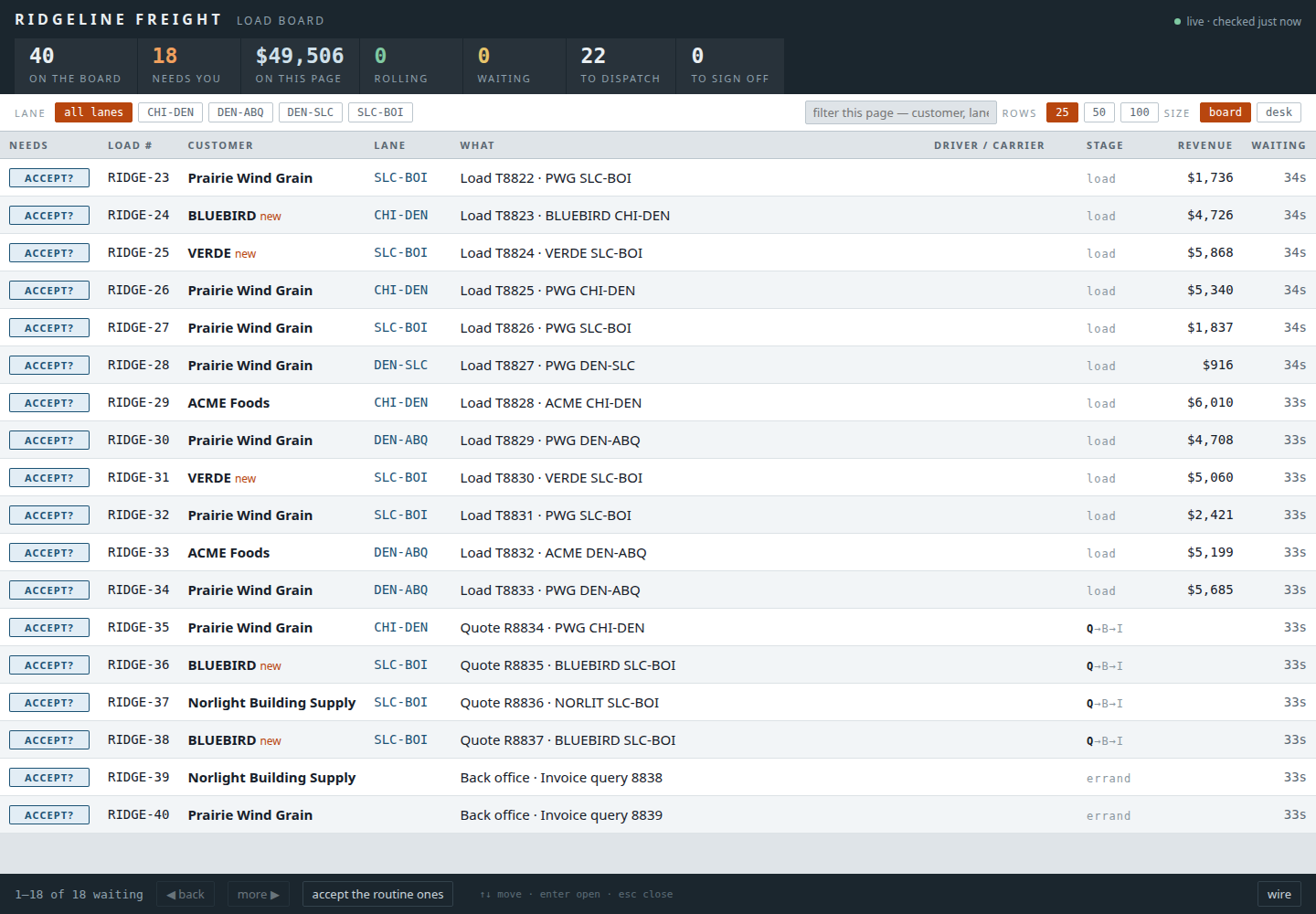
Freight back office

Two hundred inbound documents a day, transaction chains, money gates, and a dispatcher’s bounded read.

View repository
24 testsload board
  • Volume with bounded reads
  • Transaction chains, not state mutation
  • Money and liability gates
$ npm run bootstrap
$ npm test
$ npm run demo

The convergence test

Difference is evidence too.

The five interfaces share no shell. Their vocabularies, knowledge planes, clocks, and operator gestures remain local. A candidate belongs in the protocol only when unrelated worlds need the same semantic—or when an invariant already carried by the protocol demands it.